
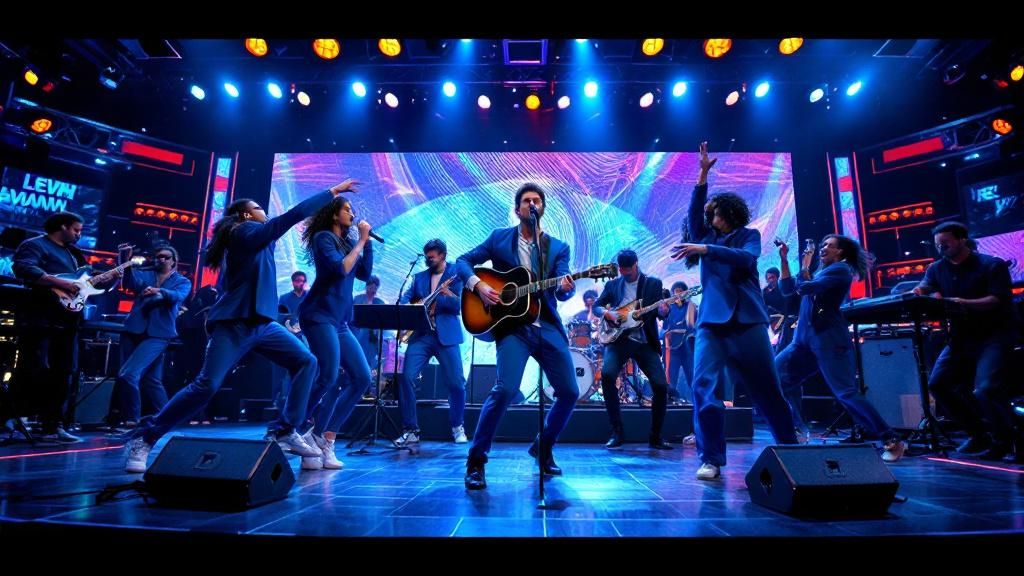
David Byrne delivered dynamic theatrical flair to The Late Show on 31 March, delivering a compelling rendition of “When We Are Singing” with Stephen Colbert. The Talking Heads principal artist, joined by a ensemble of blue-dressed musicians and dancers, presented the complete dance concept that has established itself as his signature style. The track comes from his most recent release, Who Is the Sky?, issued in September 2025. During his performance, Byrne outlined his intentional turn towards colourful, visually dynamic productions and explained his method to blending solo work with classic Talking Heads hits on his present tour, featuring “Psycho Killer” and “Life During Wartime,” whilst upholding artistic integrity.
A Theatrical Return to Late Evening TV
Byrne’s feature on The Late Show marked a striking presentation of his evolving artistic vision, one that emphasises spectacular visuals and precise choreography. The interpretation of “When We Are Singing” illustrated his readiness to engage with songwriting with wit and self-awareness, extracting comedy from the peculiar facial expressions singers necessarily make during performance. When examining his songwriting approach with Colbert, Byrne demonstrated an almost anthropological curiosity about the fundamentals of singing itself, observing how singers’ gaping mouths generate an indeterminate appearance that could indicate either ecstasy or simple physical necessity. This intellectual approach to performance art distinguishes his work from mainstream pop music.
The aesthetic transformation visible in Byrne’s current tour reflects a conscious abandonment of his previous grey production design, a intentional move rooted in contemporary cultural needs. He articulated a clear philosophy: the times call for colour and visual energy instead of stark minimalism. This shift reflects Byrne’s attunement to the emotional landscape of his audience and his recognition that set design communicates meaning as effectively as lyrics or melody. By working alongside his costumed performers, Byrne has established a cohesive visual language that enhances his sonic investigation whilst conveying an hopeful, progressive artistic stance.
- Byrne deliberately selected “When We Are Singing” to highlight absurdity of facial expressions
- Current tour features vibrant blue costumes replacing earlier grey visual design
- Performance includes Talking Heads signature pieces alongside solo material from Who Is the Sky?
- ICE footage incorporated strategically at end of “Life During Wartime” for impact
The Creative Vision Behind Who Is the Sky?
David Byrne’s latest album, Who Is the Sky?, released in September, represents a continuation of his enduring exploration of human conduct, perception, and creative expression. The record functions as a creative wellspring for his present touring venture, with “When We Are Singing” demonstrating his capacity for draw deep insights from ordinary occurrences. Byrne’s approach to songwriting stays markedly cerebral, converting mundane observations into compelling musical narratives. The album’s thematic concerns—how we present ourselves, what our expressions reveal or conceal—inform every element of his stage shows, establishing a cohesive artistic statement that extends beyond traditional album promotion into territory that is more philosophically ambitious.
The artistic fusion between the new material and Byrne’s reimagined concert visual approach creates a cohesive experience for audiences. Rather than approaching Who Is the Sky? as merely another collection of songs to be performed, Byrne integrates its thematic structure into the performance and movement dimensions of his shows. This holistic approach demonstrates his long-standing dedication to breaking down divisions between sound, movement, and visual expression. By choosing particular pieces like “When We Are Singing” for elaborate theatrical treatment, Byrne illustrates how contemporary songwriting can move beyond the studio environment and achieve full realisation as performance art on stage.
Transforming the Concert Atmosphere
Throughout his career, Byrne has continually rejected the concept of fixed, invariable stage shows. His artistic vision prioritises continuous transformation and adaptation, treating each concert run as an chance to reassess how audiences should engage with music in performance. The move from grey production aesthetics to bold, vivid staging demonstrates this commitment to reinvention. Rather than relying on nostalgic appeal or established reputation, Byrne actively constructs innovative visual frameworks that support his present creative interests, ensuring that his shows remain current and deeply affecting rather than merely retrospective.
Byrne’s partnership with his group of blue-clad musicians and dancers constitutes a deliberate commitment to choreographic storytelling. By partnering with skilled artists who grasp both musical and movement vocabularies, he creates layered performances where dance, costume, and music speak together. This multidisciplinary approach sets apart his shows from conventional concert experiences, positioning them instead as immersive creative experiences. The combination of classic Talking Heads material alongside new material demonstrates that reinterpreting doesn’t require abandoning one’s past—rather, it involves contextualising past work within fresh creative frameworks that honour their integrity whilst exploring fresh directions.
Balancing Heritage and Progress
David Byrne’s approach to his catalogue reveals a nuanced understanding of artistic responsibility. Rather than dismissing his Talking Heads era or remaining solely identified with it, he has crafted a framework that allows him to honour the past whilst preserving creative autonomy. This balance necessitates deliberate curatorial choices—selecting which classic tracks warrant inclusion in contemporary sets, and how they should be positioned within new artistic frameworks. Byrne’s readiness to play “Psycho Killer” and “Life During Wartime” alongside solo material demonstrates that legacy doesn’t have to represent stagnation or cynical backward-looking sentiment.
The risk Byrne identifies—becoming a “legacy act that delivers the old hits”—constitutes a genuine creative pitfall that many seasoned artists face. By strategically restricting his dependence on earlier material and constantly reimagining production aesthetics, he preserves creative credibility whilst acknowledging his past. This strategy protects both his creative principles and his audience’s engagement, ensuring that concerts remain vital meaningful performances rather than retrospective showcases. His refusal to commit to a full Talking Heads reunion additionally reinforces his commitment to artistic evolution over financial expedience.
Talking Heads Material in Current Times
When Byrne performs “Life During Wartime” today, the song carries distinctly modern resonance. By securing ICE footage to accompany the track’s close, he converts a 1979 post-punk piece into a statement about present-day political realities. This curatorial choice—showing the imagery solely at the conclusion rather than across the entire performance—demonstrates sophisticated editorial judgment. The approach recognises the footage’s emotional resonance whilst ensuring the performance from growing overly dark or prescriptive, maintaining the song’s artistic integrity whilst enhancing its relevance.
This framing methodology goes further than mere visual accompaniment. Byrne’s decision to integrate Talking Heads material within his touring group’s visual aesthetic creates productive dialogue across temporal boundaries. The dressed ensemble members and dynamic production design alter the way viewers encounter these familiar songs, stripping away retrospective preconceptions and demanding active engagement with their present-day significance. Instead of maintaining the songs in amber, this strategy enables them to flourish across novel artistic frameworks.
- Thoughtful inclusion of signature songs avoids artistic stagnation and legacy-act status
- Visual recontextualisation strengthens contemporary relevance without compromising artistic authenticity
- Declining reunion enables Byrne to control how and when Talking Heads catalogue is presented
The Philosophy of Performance
David Byrne’s approach to live presentation extends far beyond simply playing songs—it represents a carefully considered creative vision rooted in visual story-telling and audience behaviour. During his slot on The Late Show, he conveyed this viewpoint with distinctive care, outlining how ostensibly everyday observations about human activity inform his creative decisions. His interpretation of “When We Are Singing” illustrates this perspective: the song emerged from Byrne’s observation that singers’ open mouths during singing generate an ambiguous expression—one that could suggest either intense euphoria or basic physiological necessity. This wry observation converts into stage material, demonstrating how Byrne draws from everyday life for creative substance.
This philosophical framework extends to his wider strategy to touring and stage design. Rather than viewing concerts as static presentations of recorded material, Byrne sees each tour as an occasion for comprehensive artistic transformation. His decision to infuse the current tour with colour—an intentional contrast to the grey aesthetic of his prior stage designs—reflects deeper convictions about art’s social responsibility. In his estimation, contemporary audiences facing uncertain times need visual vitality and chromatic abundance. This is far from being a decorative choice; it embodies Byrne’s conviction that theatrical art bears a duty to uplift and energise, to deliver sensory and emotional sustenance beyond the music itself.
Colour’s Significance in Modern Times
Byrne’s explicit statement—”the times we live in, we need some color”—demonstrates how he frames artistic decisions within wider cultural landscapes. The transition from grey towards vibrant blue-costumed performers and colourful set design reflects his conviction that visual aesthetics hold political and emotional weight. This choice acknowledges contemporary anxieties and uncertainties whilst providing an counterbalance through chromatic abundance. Rather than retreating into monochromatic austerity, Byrne argues that art should actively resist despair through its chromatic vocabulary, converting the performance space into a venue of intentional, vital chromatic expression.
