
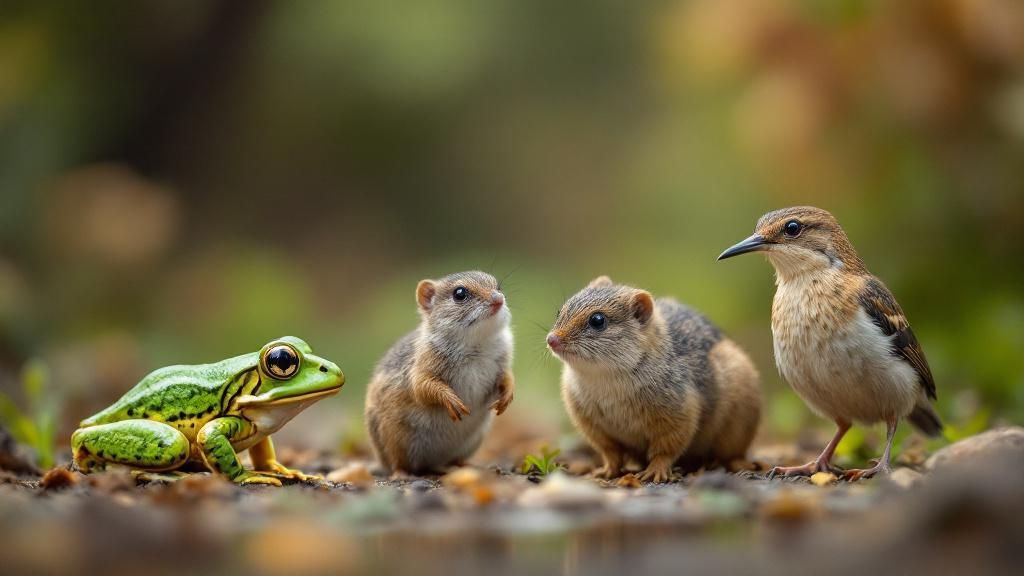
From a tiny emerald frog discovered deep in the Peruvian Amazon to a distressed humpback whale beached in the Baltic waters, nature keeps on amazing and test us in equal measure. This week’s animal stories span the globe, recording both heartwarming rescues and sobering reminders of the fragility of our world of nature. A juvenile fox cub left in Glasgow has found refuge at a wildlife centre in Scotland, whilst conservationists in Uganda celebrate the successful relocation of rhinoceroses—a species that had been driven to extinction in the country just four decades earlier. Beyond these tales of human intervention and animal adaptability, extraordinary animals continue their daily routines: birds building nests, migrating species finding sanctuary, and predators searching for their next food source. Together, these snapshots expose the complex network of life that surrounds us.
Notable Discoveries in the Wildlife Realm
Scientists working in the Peruvian Amazon have identified a remarkable new species of frog that challenges our understanding of amphibian diversity in the world’s most biodiverse region. Gastrotheca mittaliiti, spanning slightly more than an inch in length, displays an captivating shade of green that allows it to merge effortlessly into its rainforest habitat. What distinctly separates this miniature creature apart, however, is its extraordinary reproductive strategy: the female carries her eggs in a natural pouch on her back, much like a marsupial mammal. This discovery underscores the extraordinary adaptations that evolution has generated in response to the pressures and opportunities of the Amazon ecosystem.
Meanwhile, environmental programmes internationally are producing promising gains for species nearing extinction. Uganda’s rhino population, which was wholly eradicated in the wild by 1983, is now undergoing a striking resurgence thanks to a specialist breeding project at the Ziwa sanctuary. Rangers have started relocating these precious animals to safe spaces in other parts of the country, gradually restoring populations to protected national parks. Such achievements prove that with appropriate investment and resources, humanity can overcome major population collapses and offer hope to species hovering on the brink of extinction.
- New frog species discovered in Peruvian Amazon with remarkable egg-carrying pouch adaptation
- Uganda’s extinct rhino population being restored through sanctuary breeding programmes and relocation efforts
- Endangered species conservation projects demonstrating tangible progress across multiple continents
- Scientific research continues revealing previously unknown biodiversity in tropical rainforest regions
Conservation Projects Delivering Results Globally
From the savannas of eastern Africa to the remote isles of Scotland, conservation initiatives are delivering tangible results for wildlife populations that confronted precarious prospects. These successes represent years of dedicated work by scientists, field staff and indigenous populations who have rejected the notion of extinction as inevitable. Whether through controlled reproduction schemes or targeted removal of non-native organisms, the point is evident: with adequate dedication and scientific expertise, humanity can undo ecological harm and reestablish natural equilibrium. These triumphs, despite their difficulty, offer encouragement for environmental professionals striving to safeguard the planet’s remaining biodiversity.
The scope and variety of these initiatives underscore a fundamental shift in how we tackle wildlife management. Rather than regarding conservation as a futile fight against overwhelming odds, practitioners increasingly adopt data-driven methods that deliver tangible improvements. Translocation programmes, management of invasive species, and habitat recovery have all demonstrated success when carried out with thoroughness and commitment. These accomplishments are not just scientific breakthroughs; they reflect a dedication to coming generations, ensuring that species we nearly lost will flourish in the wild for centuries to come.
Uganda’s Rhino Movement Programme
Uganda’s rhinoceros population represents one of conservation’s most remarkable turnarounds. After the last wild rhino was eliminated in 1983, the species seemed permanently lost from the nation’s natural habitats. However, the Ziwa rhino sanctuary created a breeding programme that has effectively restored the population from near-total extinction. Today, rangers are actively translocating these animals to protected areas throughout the country, such as Kidepo Valley national park in the north, systematically returning rhinos to their ancestral ranges.
The relocation procedure requires meticulous planning and expertise to ensure the animals’ health during transport and their effective establishment into new environments. Each rhino must be properly evaluated and observed across the journey, with specialists assessing their health and readiness. By distributing the population across multiple conservation zones, conservationists lower the likelihood of catastrophic loss from disease or poaching whilst simultaneously rewilding ecosystems that have been without these magnificent creatures for four decades.
The Orkney Vole Recovery
The remote Orkney archipelago off Scotland’s north coast has seen a silent environmental success as native vole populations rebound after concentrated campaigns to reduce invasive stoats. These predatory mammals, established on the islands decades ago, severely damaged the indigenous vole communities, jeopardising the fragile equilibrium of Orkney’s particular ecological system. Sustained culling efforts have markedly lowered stoat populations, allowing voles to flourish once more in the local gardens and grassy areas, where they may be seen foraging amongst the vegetation.
The restoration of Orkney’s voles illustrates how targeted intervention can restore environmental balance disrupted by human activity. By eliminating the invasive predators that were absent from the islands’ native wildlife, conservationists have enabled native species to reestablish their ecological niches. This success story demonstrates the importance of comprehending how introduced species impact island ecosystems and the measurable advantages that result when such invasions are reversed, offering valuable lessons for conservation initiatives worldwide.
Loss and Recovery in Marine Life
The waters off northern parts of Germany recently became the focus of an international rescue initiative when a humpback cetacean, fondly known as Timmy, became stranded near Lübeck in the Baltic Sea. Marine biologists suggest the whale had accidentally swum into the shallow regions of the Baltic, a directional miscalculation that proved devastatingly costly. Despite early refloating efforts by dedicated rescue teams, Timmy stayed too weak and disoriented to navigate back towards the North Sea, where deeper waters and open waters would give the whale a real chance of survival and journey back to its natural migratory routes.
Ultimately, rescuers chose to cease their efforts, recognising that Timmy’s state had worsened irreversibly. This devastating outcome highlights the challenges encountered by marine mammals in an ever-more complicated ocean environment, where shipping lanes, changing water temperatures, and navigational confusion present significant dangers to these remarkable creatures. Whilst rescue efforts for single animals engage public interest and demonstrate our care for wildlife, they also reveal the broader conservation challenges affecting whale populations and the significance of protecting their native environments and migration corridors from human activity and climate-related disruption.
- Humpback whale beached in Baltic Sea after accidental navigation error into shallow waters
- Initial refloating efforts unsuccessful due to whale’s severe weakness and disorientation
- Case highlights wider dangers to sea mammals from human activity and environmental change
Remarkable Animal Actions Documented Across the Globe
From the vibrant streets of Indian cities to the serene wetlands of Central America, wildlife continues to demonstrate striking adaptability and ingenuity in moving through human-dominated landscapes. A rose-ringed parakeet in Prayagraj was lately spotted taking away wheat ears, exemplifying how urban bird populations have developed the ability to exploit alternative food sources in densely inhabited areas. Meanwhile, a caiman in Panama City’s suburban wetlands showcases wildlife’s resilience, thriving in small pockets of habitat wedged between residential developments. These observations show that despite loss of habitat and urbanisation, animals demonstrate extraordinary behavioural flexibility, finding sustenance and shelter in unusual spaces and reminding us that wildlife persists in the margins of human civilisation.
Equally fascinating are the seasonal rituals and breeding behaviours documented throughout diverse ecosystems. In Seattle, a female house finch demonstrated maternal dedication by carrying twigs to build her nest within a residential home’s ventilation system, illustrating how some species have adapted into human structures. Meanwhile, white pelicans gathered at Lake Çavuşçu in Turkey, converting the refilled water body into a crucial stopover point for travelling birds dealing with drought-induced hardship. These snapshots of animal behaviour underscore the interconnectedness of wildlife with ecological circumstances and human spaces, revealing intricate survival strategies that evolve in response to changing circumstances and opportunities.
| Location | Notable Behaviour |
|---|---|
| Prayagraj, India | Rose-ringed parakeet foraging for wheat ears in urban environment |
| Seattle, Washington, USA | Female house finch nesting inside residential home ventilation vent |
| Albrook, Panama City | Caiman thriving in small suburban wetland habitat |
| Lake Çavuşçu, Turkey | White pelicans using refilled lake as migratory stopover point |
| Alkmaar, Netherlands | Gull opportunistically targeting transported cheese at seasonal market |
Sperm Whale Delivery Support Advancement
Recent studies have identified remarkable cases of sperm whales helping with the birth process of their family members, representing a major advancement in understanding cetacean social organisations and maternal care. These striking examples of collaborative action demonstrate that whales have advanced emotional capacities and group ties far more profound than earlier understood by marine biologists. The help given during labour points to complex communication systems and compassionate reactions within whale populations, contradicting earlier notions of the solitary nature of cetacean reproduction and highlighting the intricate social organisations that govern whale societies.
This observation carries substantial implications for marine conservation strategies, as it underscores the vital role of protecting complete pod groups rather than focusing solely on individual animals. Understanding these intricate social dynamics reveals that fragmenting social bonds through hunting practices, vessel strikes, or ecosystem damage has far-reaching effects beyond short-term mortality figures. The ability of whales to support vulnerable members during essential developmental periods emphasises the critical importance of protecting kinship bonds and enabling natural behaviour to develop, ultimately strengthening population resilience and sustained species persistence in rapidly changing marine conditions.
Urban Wildlife and Seasonal Spectacles
As human settlements spread across the globe, wildlife increasingly adapts to urban environments, creating unexpected encounters between nature and city life. From a female house finch carefully constructing her nest inside a residential ventilation vent in Seattle to a caiman thriving in a modest wetland tucked behind suburban streets in Panama City, these animals display remarkable resilience and ingenuity. Similarly, a young fox cub abandoned in Glasgow’s bushes was rescued by the Scottish SPCA and is now recovering at their National Wildlife Rescue Centre, highlighting how urban communities contribute significantly in wildlife protection and rehabilitation efforts.
Seasonal shifts bring their own spectacles to both natural and modified landscapes. In the Netherlands, gulls opportunistically target cheese at Alkmaar’s traditional market, whilst in Turkey, flamingos and rose-ringed parakeets display their striking feathers at key seasonal locations. Perhaps most poignantly, Lake Çavuşçu in Turkey has become a crucial migratory stopover for white pelicans after its replenishment after drought, illustrating how habitat restoration can revive habitats for migratory birds. These instances remind us that wildlife continues to flourish, adapt, and thrive within the intricate patchwork of present-day landscapes.
- Fox cub rescued in Glasgow gets specialised treatment and recovery support at wildlife facility
- House finch creates nest within suburban home ventilation vent in Seattle
- Caiman population thrives in compact wetland environment within Panama City suburbs
- White pelicans make use of replenished Turkish water body as crucial migration rest site
- Gulls and parakeets take advantage of seasonal food sources in European and Asian locations
